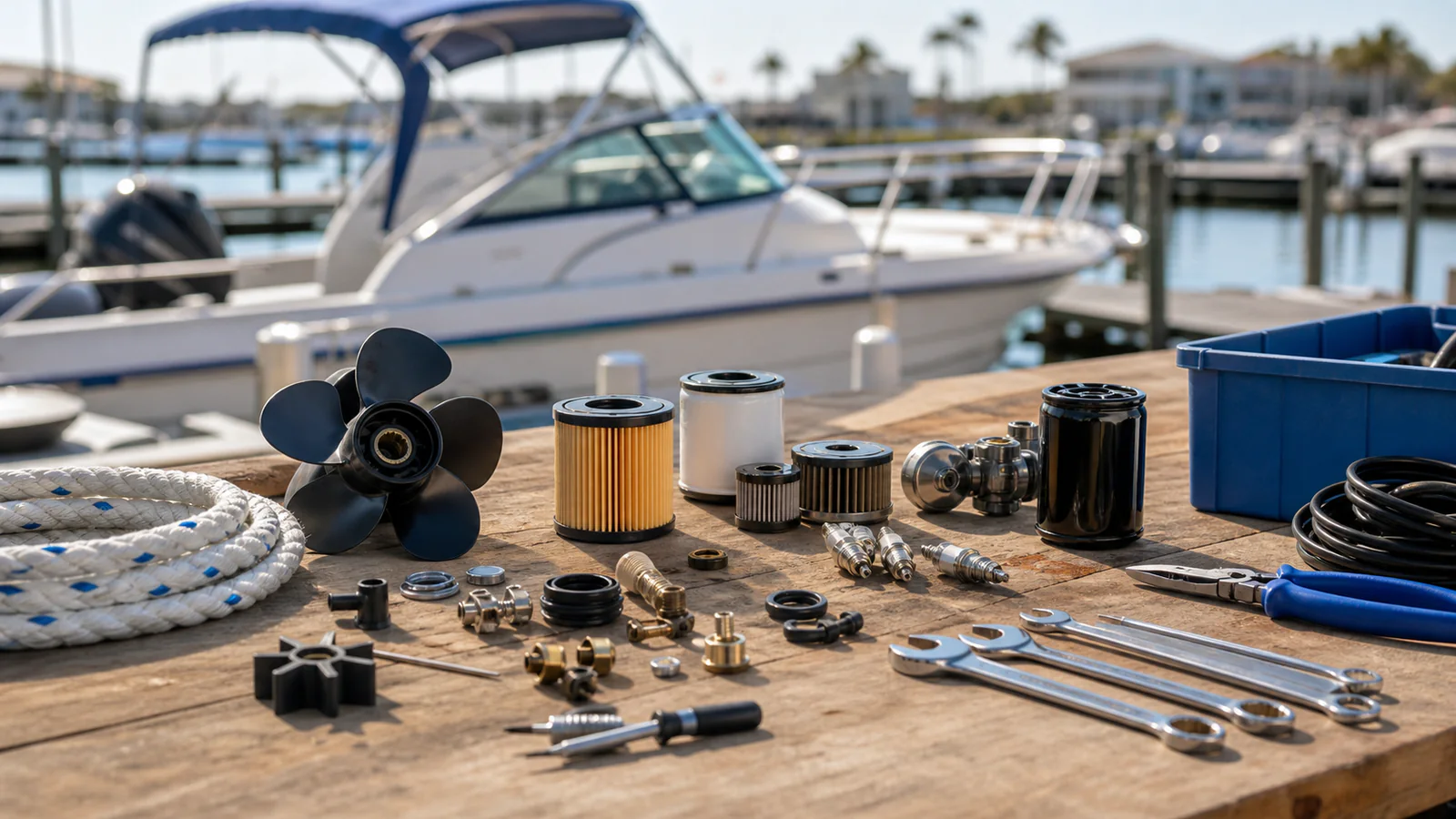
PartsVu carries OEM and aftermarket marine parts, service kits, propellers, fluids, accessories, and owner resources across several engine brands. With marine maintenance, visual similarity is not enough: a component must match the exact engine, application, and service requirement.
This page is a shopping checklist, not mechanical or boating-safety instruction. Follow the manufacturer’s service manual and use a qualified marine technician when the work exceeds your training.
Who this may suit
Boat owners and technicians who have exact engine identification and part references and want to compare OEM, aftermarket, maintenance, and accessory options.
Roy Collective perspective
Start with the serial or model identification, not the part photograph. Preserve removed part numbers and cross-check the current schematic or manufacturer documentation before opening packaging.
Ready to review the current PartsVu offer?
Prices, inventory, eligibility, shipping, and terms can change. Confirm the complete current details on the advertiser’s website before purchasing.
Search PartsVu marine parts →What to compare before you buy
- Engine brand, family, model, year, serial range, and application
- OEM part number, supersession, kit contents, and approved alternatives
- Maintenance interval, fluid specification, quantity, and required tools
- Hazardous-material shipping, opened-part returns, warranty, and lead time
Build an identity record first
Photograph the engine identification plate and write down the model and serial information. For boats with multiple engines or systems, label which unit the part belongs to.
Use schematics and manufacturer references to verify the current part number. A superseded number may be valid, but it should be supported by the listing or manufacturer documentation.
Inspect the order before installation
Compare the delivered label and physical dimensions with the removed component before opening sealed packaging where practical. Confirm that a kit contains every gasket, seal, filter, or fastener expected.
Installation errors can create safety and equipment risks. Stop if documentation, torque values, compatibility, or procedure is unclear.
Final pre-purchase checklist
- Record exact engine model and serial information.
- Verify the current part number and any supersession.
- Compare kit contents and specifications.
- Review shipping and opened-part return limits.
- Use manufacturer procedures or a qualified technician.
Frequently asked questions
Can I identify a marine part from a photo?
A photo can help, but exact model, serial, schematic, and part-number matching are more reliable.
Does Roy Collective provide installation advice?
No. Follow manufacturer instructions or a qualified technician.
Are all parts returnable after opening?
Not necessarily. Check the listing and return policy before opening or installing.
Ready to review the current PartsVu offer?
Prices, inventory, eligibility, shipping, and terms can change. Confirm the complete current details on the advertiser’s website before purchasing.
Search PartsVu marine parts →